Blueprint- How to Get Results
Last week we talked about how in order to get a desired output, we need a specific input. That input needs to demand a specific response or adaptation from our body. To increase cardiovascular fitness, we need to demand higher cardiac output. We learned to set our expectations based on what we tell our body that it needs to do. The more regularly you walk 5 miles, the better your body feels about doing so, and the easier those 5 miles become. Specific input: specific adaptation. Eventually though, we get diminishing returns if we don’t adjust the input. There’s only so much easier that walking 5 miles can feel. Most things in fitness operate similarly, especially muscle growth.
Your body builds the muscle that you tell it to. Adequate protein intake gives your body the supplies, strength training sends the signal (acts as the demand). If we lift ‘x’ sets of ‘y’ we can never expect our body to adapt beyond being able to lift ‘y’. It won’t. It has no reason (demand) to. ‘Progressive Overload’ is a term used quite often in the weight lifting space. It simply means that over time, we continue to add to one or multiple variables that contribute to what’s known as ‘volume’.
Sets x Repetitions x Weight (load) = Volume
Many lifters fall under the impression that the weight is the variable you need to increase in order to get bigger or stronger. While that is an important variable, the other two matter equally. What matters is the incremental increase in the output over long periods of time. The good news is, volume is our signal. Volume being the input, demands a proportional output. If we increase the volume as part of a strategic long term plan, we get the output in the way of muscle size and strength, the adaptation we are after.
Now, what is a “strategic long-term plan"? Lots to go over here, but I’ll keep it concise. Consistency is king. The ability to increase your volume by 2% each week, and perform it year round yields far greater returns than increasing that volume by 15%, but only being able to sustain 60% of the time before running into regression or setback. Here are a few reasons why seemingly slower progression will get you further in the long run:
A) Recovery. We want our routine to be just intense enough to send our body an adequate signal for a demand to adapt, but not too intense that it takes days to recover. Sleep, stress management, proper diet and nutrition, and active recovery (walking, moving, mobility) are all just as important as the lifting. Recovery is where the gains happen, the workout is simply the demand or signal, and nothing more. Workout - Recovery = NO Gains.
B) Energy outside of the gym. Lifting heavy weights is taxing. It takes a toll on our body and nervous system and can leave us fried and tired if done too heavy too often. If our stress level in the gym becomes too great, our overall stress level becomes something we can’t sustain or recover from, which ultimately leads to burn out and unsustainable gym routines.
C) Connective tissue. Muscle adapts relatively quickly, tendons, ligaments and other connective tissue do not. (see image below) Adding weight to the bar may be something we are strong enough to handle from a muscle strength perspective, but eventually all the other tissue in your body will not be able to catch up to the pace at which we are increasing the load. This causes nagging aches and pains, sometimes injury, and leads to a routine that starts and stops.
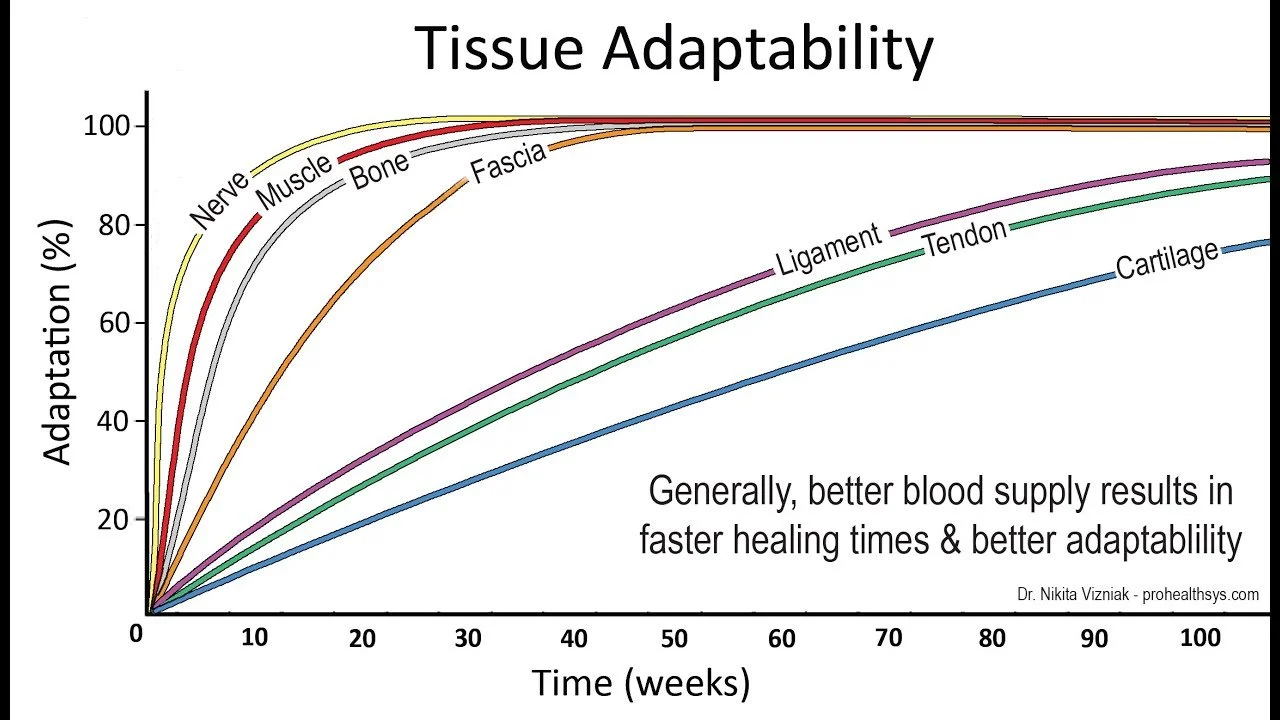
This graph shows the recovery & adaptation time for various types of tissue after exercise. As you can see: our nervous system, muslce and bone structure adapt much faster than ligaments and tendons. Progressing load too quickly leads to injured tissues, specifically tendons and ligaments.